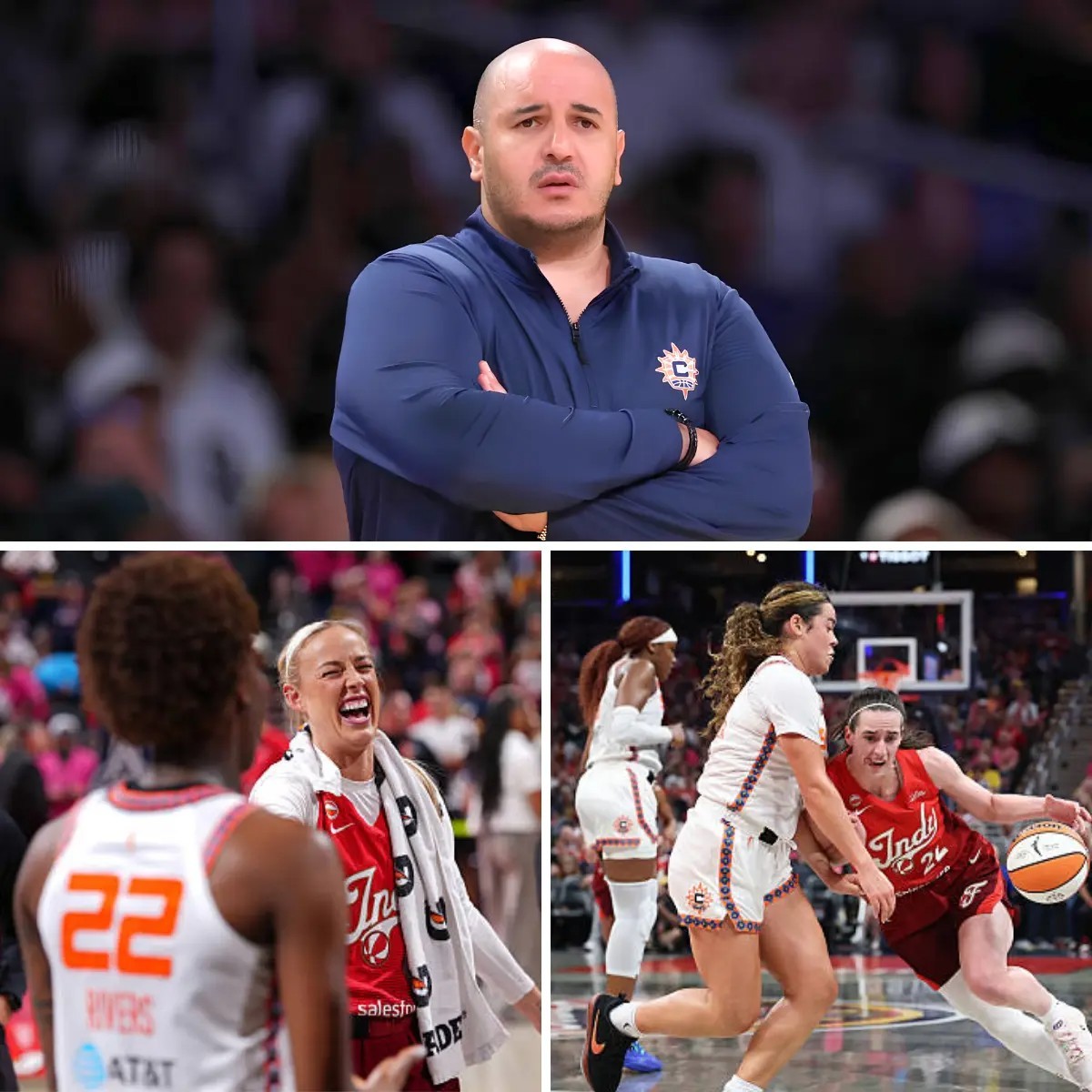
The final score may have read 111–91, but according to the fictional scenario surrounding the game, the conversation did not end when the final buzzer sounded.
Instead, what initially looked like another dominant Indiana Fever victory quickly developed into a much larger debate about officiating, momentum, competitiveness, and the increasingly intense rivalry between Indiana and Connecticut.
For Indiana, the 20-point victory represented the kind of performance teams dream about.
Connecticut’s Frustration and Questions
For Connecticut, however, the result reportedly left behind frustration and questions.
And one alleged postgame comment became the spark that pushed the entire conversation into overdrive.
From the opening minutes, Indiana appeared determined to establish control.
The Fever played with energy, moved the ball efficiently, defended with intensity, and repeatedly found ways to punish Connecticut whenever the Sun attempted to regain momentum.
As the game progressed, the difference between the two teams became increasingly difficult to ignore.
Connecticut’s frustration grew alongside it.
By the fourth quarter, the Fever had created a substantial advantage, and the atmosphere surrounding the game had become increasingly emotional.
When the final horn sounded, Indiana had secured a convincing 111–91 victory.
Fans responded with enthusiasm.
The Indiana bench appeared energized by the result.
But according to the fictional storyline, Connecticut’s reaction was dramatically different.
Rather than simply accepting the defeat and moving forward, questions allegedly began circulating about the officiating and several important sequences that had occurred during the game.
Basketball games are often decided by dozens of small moments.
A possession that changes momentum.
In this fictional account, Connecticut supporters believed several of those moments had influenced the direction of the contest.
The most significant concern reportedly involved a series of calls during a tense portion of the game.
Some Connecticut voices argued that Indiana had benefited from decisions that helped maintain its momentum.
Others countered that the Fever simply executed better when the pressure increased.
That disagreement created the perfect environment for controversy.
Was the final 20-point margin an accurate representation of Indiana’s superiority?
Or did certain moments contribute to the score becoming more one-sided than the game itself suggested?
Those questions quickly became part of the postgame discussion.
According to the supplied fictional scenario, one comment eventually became the centerpiece of the controversy.
The alleged message was blunt: “Don’t act like Indiana beat us fair and square.”
The statement immediately changed the tone.
Rather than discussing individual plays, strategy, or execution, the conversation suddenly became personal.
For Indiana, such a remark could easily be interpreted as an attempt to minimize the team’s performance.
After all, a 20-point victory represents more than one controversial possession.
It represents four quarters of basketball.
And the ability to maintain focus when an opponent is attempting to fight back.
That is why the alleged comment reportedly attracted such a strong reaction inside the Fever locker room.
In the fictional storyline, players returning to the locker room were still processing the emotional intensity of the game when they heard what had allegedly been said.
The atmosphere reportedly changed.
Instead of celebrating immediately, several players became quiet.
The question was no longer simply whether Indiana had won.
It was whether the victory deserved to be questioned after such a convincing performance.
One Fever player, according to the fictional account, eventually responded.
No attempt to insult Connecticut.
Instead, the response consisted of only a few carefully selected words.
That brevity reportedly made the answer even more powerful.
The message was essentially this: “The scoreboard tells the story.”
Whether those exact words were ever spoken is unverified, but within the fictional narrative they represented the central philosophy of Indiana’s response.
Don’t create unnecessary drama.
The growing tension between Indiana and Connecticut represents something larger than one game in this fictional scenario.
The WNBA has increasingly become a league in which every matchup can carry significant attention.
Established players are protecting their reputations.
Teams are fighting for postseason positioning.
And every controversial moment can spread across social media within minutes.
Indiana, in particular, has become one of the league’s most closely followed teams.
That means victories are rarely treated as ordinary victories.
Every performance is analyzed.
Every disagreement can become a headline.
Connecticut understands that reality as well.
That is why the alleged postgame remarks generated such intense discussion.
Once the story began circulating online, reactions reportedly divided almost immediately.
Fever supporters argued that Connecticut was making excuses.
They pointed to the final score and insisted that Indiana had earned its victory through superior execution.
Some fans emphasized the Fever’s offensive rhythm and defensive pressure, arguing that no collection of questionable calls could fully explain a 20-point difference.
Connecticut supporters, meanwhile, argued that the discussion should not be reduced to the final number.
They wanted individual plays examined.
They wanted officiating decisions discussed.
And they questioned whether momentum had been affected by the sequence of calls.
Both sides believed they were defending the integrity of the game.
That is what made the debate so difficult to resolve.
At the center of the controversy is a question that has existed in sports for generations.
What makes a victory legitimate?
Or should the circumstances surrounding that score also be examined?
In most competitive sports, both answers matter.
Teams must accept officiating decisions while also recognizing that officials can make mistakes.
Players must take responsibility for their own execution while acknowledging that momentum can be affected by circumstances beyond their control.
That balance is part of competition.
The challenge comes when disagreement turns into accusation.
According to the fictional narrative, Indiana ultimately chose not to prolong the argument.
The Fever’s response was simple.
Rather than becoming consumed by Connecticut’s alleged criticism, Indiana focused on what it could control.
That attitude may ultimately prove more important than any postgame argument.
Because championships are not won through social-media debates.
They are not won through press conferences.
They are won through preparation, discipline, execution, and consistency.
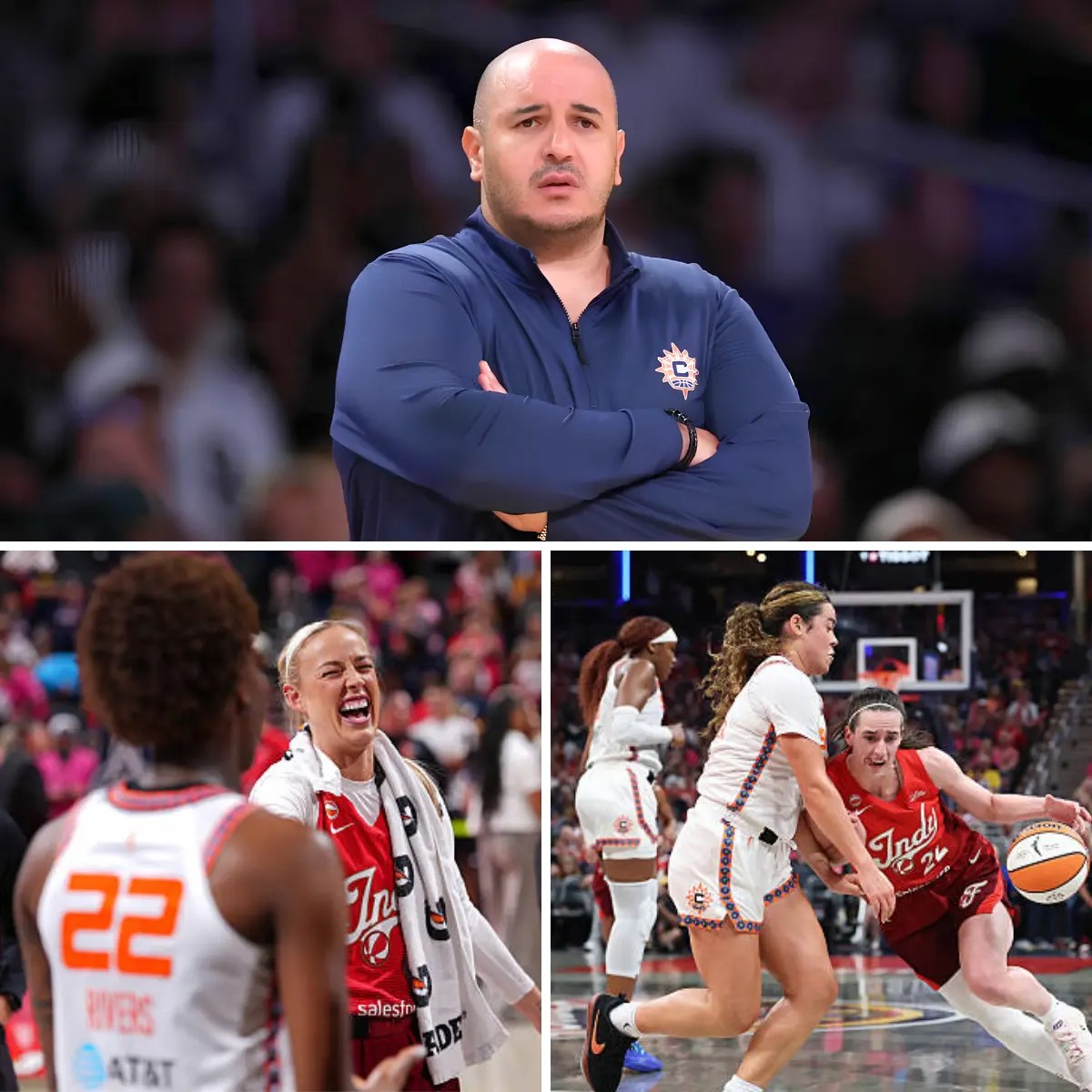
The fictional controversy surrounding the 111–91 result therefore becomes about far more than one score.
It raises questions about officiating.
It raises questions about accountability.
It raises questions about how athletes respond when their achievements are questioned.
And perhaps most importantly, it raises questions about how rivalries should develop in a league increasingly defined by intense competition and enormous public attention.
For Indiana, the message is straightforward: win the next possession.
For Connecticut, the challenge is equally clear: respond on the court.
And for fans, that may be the most exciting part of all.
If these two teams meet again, every whistle will be watched.
Every physical battle will be analyzed.
Every momentum swing will carry additional weight.
And every postgame word will be examined more closely than before.
The fictional 111–91 victory may have ended with Indiana celebrating and Connecticut walking away disappointed.
But the controversy surrounding the game suggests that the rivalry may have only just begun.
Because sometimes, the final buzzer doesn’t end the story.
Sometimes, it starts the next chapter.
The WNBA has never been short on controversy, but the latest wave of online debate involving Brittney Griner, Sophie Cunningham, and outspoken sports commentator Stephen A. Smith has created another combustible conversation around the league.
Social media posts have portrayed Smith as having “destroyed” the WNBA for allegedly protecting Griner while suddenly throwing his support behind Cunningham. It is the kind of headline guaranteed to generate attention. But the most explosive claims circulating online — particularly references to a supposed “dirty secret” involving Griner — should not be treated as established fact without credible evidence.
Still, the underlying debate touches on something very real: consistency.
Fans increasingly scrutinize how the WNBA, officials, media members and television commentators respond when different players become involved in physical confrontations or controversial moments.
And Cunningham has emerged as one of the players at the center of that discussion.
Cunningham’s reputation has always been built partly around toughness.
She isn’t afraid of physical basketball, rarely hides her emotions and has demonstrated a willingness to stand her ground when games become heated.
That personality makes her popular with some fans and controversial with others.
For Indiana, however, that competitive edge can be valuable.
Playing alongside high-profile teammates means Cunningham’s actions receive greater attention than they otherwise might.
A hard foul that would disappear into an ordinary game recap can suddenly become a viral clip. A confrontation can generate days of debate.
That creates an obvious question: Are all WNBA players being judged by the same standard?
It is precisely the kind of subject Smith has built his television career discussing.
Smith’s broadcasting style is confrontational by design.
He challenges leagues, executives, coaches and athletes when he believes something doesn’t add up. He has also discussed women’s basketball extensively as its national profile has expanded.
That doesn’t mean every dramatic quote attributed to him on social media is authentic.
But the broader argument commonly associated with this controversy is straightforward: if the league wants credibility, rules and disciplinary standards need to be applied consistently regardless of the player’s popularity or reputation.
That principle shouldn’t be controversial.
A foul should be evaluated according to what happened on the court.
A suspension should follow established rules.
And criticism should be based on evidence rather than assumptions about individual players.
The same principle applies to Griner.
Griner has spent years as one of the most recognizable figures in women’s basketball.
Her physical presence inevitably creates difficult officiating situations because contact involving a dominant post player can look dramatically different from contact involving a smaller guard.
But Griner’s fame shouldn’t automatically protect her from criticism.
Nor should it make her guilty of accusations unsupported by evidence.
That’s where the online conversation frequently loses perspective.
Calling something a “dirty secret” creates the impression that hidden wrongdoing has been proven.
Without reliable reporting demonstrating that such a secret exists, that wording turns speculation into an allegation.
There is already enough legitimate material to debate without doing that.
Analysts can criticize officiating.
Former players can debate physicality.
Commentators can question league discipline.
And Cunningham’s supporters can argue she is treated unfairly.
None of those discussions requires inventing hidden scandals.
What makes Cunningham particularly compelling is that she represents an increasingly visible style of WNBA personality.
And she doesn’t appear particularly interested in making herself universally liked.
For supporters, that’s refreshing.
Sports audiences have always gravitated toward athletes who appear willing to defend teammates and challenge opponents.
It is also why Cunningham can become polarizing.
The exact qualities that supporters describe as toughness can be interpreted by opposing fans as unnecessary aggression.
That disagreement isn’t unique to women’s basketball.
NBA history is filled with players celebrated by their own fan bases and despised everywhere else.
The WNBA’s growing popularity means similar rivalries and arguments are inevitable.
In some ways, that’s evidence of growth.
People don’t passionately debate leagues they don’t care about.
The league’s real challenge isn’t preventing controversy.
Fans need to believe officiating decisions are made consistently. Players need confidence that dangerous contact will be addressed. Coaches need to understand where officials are drawing the line between physical defense and excessive contact.
And disciplinary decisions need clear explanations.
When those standards appear inconsistent, conspiracy theories quickly fill the information vacuum.
That becomes especially dangerous when major names are involved.
Griner already generates enormous attention.
Cunningham increasingly does too.
Add a personality as influential and confrontational as Smith to the conversation, and almost any disagreement can explode across social media.
The easiest version of this story would be Griner versus Cunningham.
The more meaningful version is consistency versus inconsistency.
Cunningham shouldn’t receive favorable treatment simply because fans enjoy her toughness.
Griner shouldn’t receive favorable treatment because she is an established star.
Likewise, neither player should be condemned based on viral allegations that haven’t been substantiated.
If Smith or any other major commentator wants to challenge the WNBA, that is the strongest argument available: judge everyone according to the same rules.
That standard protects players while strengthening the league’s credibility.
The WNBA is attracting larger audiences and increasingly intense sports-media coverage. With that growth comes something unavoidable — scrutiny.
Every controversial whistle will be replayed.
Every confrontation will be dissected.
And every disciplinary decision will be compared with previous cases.
Sophie Cunningham may have gained another wave of supporters because of her willingness to compete without backing down. Brittney Griner will continue to attract attention because of her stature within the sport. And Stephen A. Smith will almost certainly remain willing to challenge professional leagues when controversy erupts.
But underneath all the shouting is one question the WNBA cannot afford to ignore: When the names and jerseys are removed, is everyone actually being judged by the same standard?