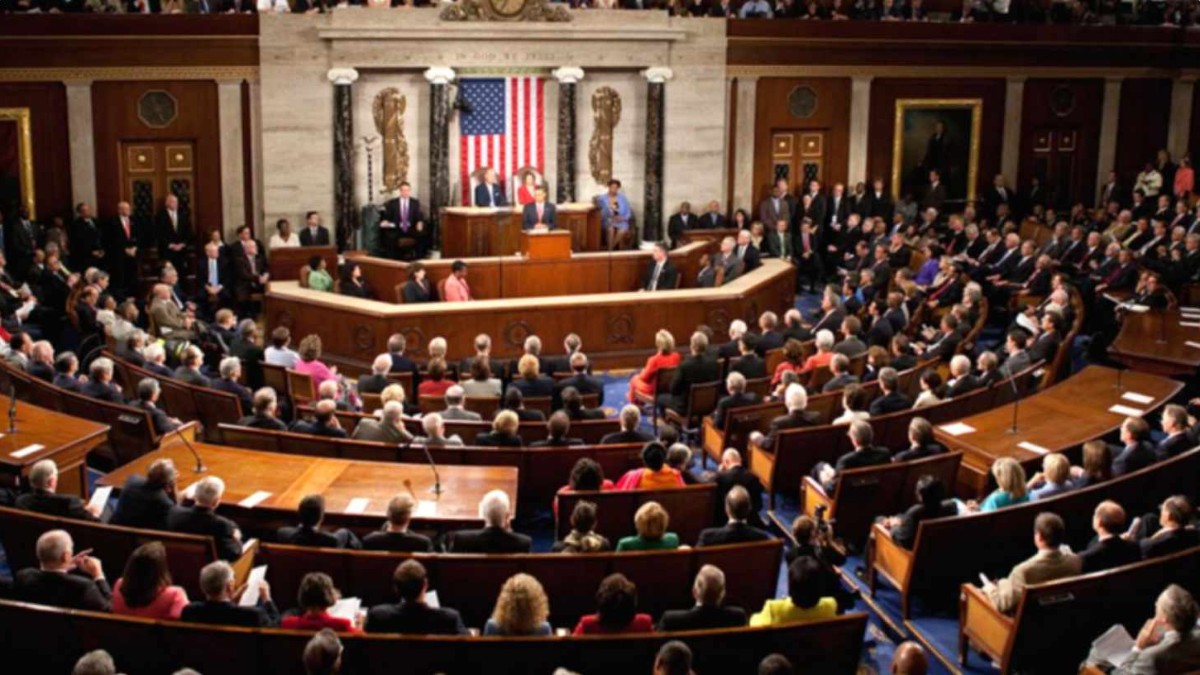
House Republicans handed President Donald Trump a significant legislative win Tuesday, narrowly approving a massive border security funding package that guarantees billions of dollars for ICE and Border Patrol through the remainder of his second term.
The bill passed by a razor-thin 214-212 vote after a tense showdown on the House floor.
For much of the vote, the outcome remained uncertain. At one point, lawmakers were deadlocked at 213-213 before a final Republican vote pushed the legislation across the finish line and sent it to the president’s desk.
The package provides roughly $70 billion in new funding, including:
• $38.6 billion for Immigration and Customs Enforcement (ICE)
• $22.6 billion for Customs and Border Protection (CBP)
• Nearly $5 billion for broader Department of Homeland Security operations
• Additional resources for child exploitation investigations and related law enforcement efforts
Record Immigration Enforcement Investment
The vote represents one of the largest immigration enforcement investments ever approved by Congress and effectively ensures that Trump’s border agenda will remain fully funded through January 2029.
Republicans used the budget reconciliation process to move the legislation through Congress with a simple majority vote, avoiding the normal 60-vote Senate threshold that often stalls major legislation.
Supporters say the funding will allow the administration to continue expanding deportation operations, increase detention capacity, hire additional personnel, strengthen border security infrastructure, and maintain aggressive enforcement efforts without having to return to Congress every year for funding battles.
For the White House, the significance extends far beyond the dollar amount.
Political Implications and Long-Term Strategy
The legislation effectively removes one of the biggest political weapons available to opponents of Trump’s immigration agenda: the annual appropriations process.
Instead of fighting over funding every fiscal year, the administration now has resources locked in for the remainder of the president’s term.
The vote also comes after months of anti-ICE protests, demonstrations, and activist campaigns targeting the administration’s immigration policies.
Progressive groups and Democratic activists have repeatedly demanded restrictions on ICE operations, reductions in enforcement activity, and broader changes to federal immigration policy.
Yet the final result on Capitol Hill moved in the exact opposite direction.
Congressional Action and Democratic Opposition
Congress did not impose new limitations on ICE.
It did not scale back enforcement authority.
It did not reduce funding levels.
Instead, lawmakers approved tens of billions of additional dollars to expand and strengthen the agencies at the center of Trump’s immigration strategy.
For many Republicans, that reality stands in sharp contrast to the political energy spent opposing the administration’s enforcement efforts.
While protesters filled streets and activists organized demonstrations across the country, Congress ultimately voted to provide ICE and Border Patrol with some of the strongest funding commitments in their history.
The legislation also builds on a major funding package approved in 2025 that dramatically expanded ICE’s budget and elevated the agency into the ranks of the federal government’s largest law enforcement operations.
Taken together, the two measures represent a long-term commitment to immigration enforcement that will likely shape federal policy for years.
Broader Policy Implications
Democrats overwhelmingly opposed the bill, arguing that Congress should focus on broader immigration reforms rather than expanding enforcement operations.
Republicans countered that voters demanded stronger border security and that the federal government needed the resources to enforce existing immigration laws.
The final vote highlights just how central immigration remains to Trump’s second-term agenda.
It also demonstrates that despite intense political opposition, Republicans have been able to translate campaign promises into concrete policy victories.
The practical outcome is straightforward.
The Department of Homeland Security is funded.
And those funding streams are now protected through the end of Trump’s presidency.
For supporters of the administration’s immigration agenda, Tuesday’s vote was more than a routine spending bill.
It was confirmation that the policies at the heart of Trump’s border platform are not only surviving politically, but receiving long-term support from Congress as well.