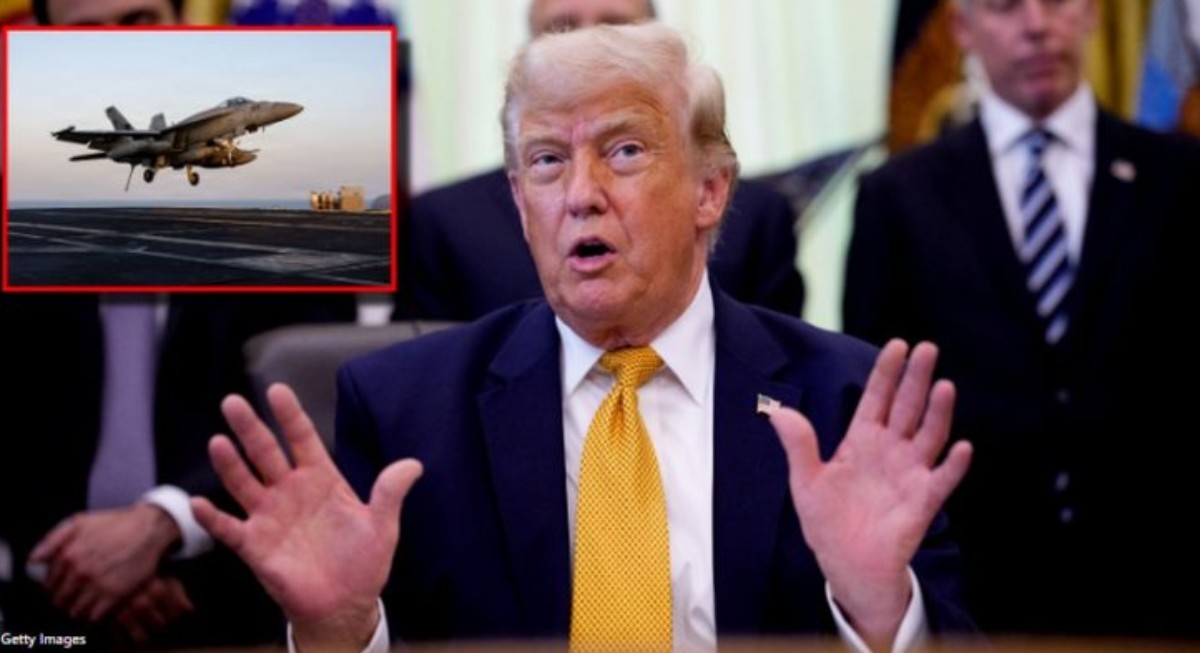
The United States launched airstrikes against Iranian military installations Friday after Tehran deployed attack drones that struck a cargo vessel transiting the Strait of Hormuz, escalating tensions over a fragile ceasefire agreement signed just weeks earlier.
President Donald Trump initially announced the Iranian drone assault on Truth Social, stating that Tehran had fired four unmanned aircraft at commercial shipping in one of the world’s most critical maritime chokepoints. “The Islamic Republic of Iran shot at least four One Way Attack Drones at Ships transversing the Strait of Hormuz,” Trump wrote, adding that one drone hit a cargo ship’s upper deck while American forces intercepted three others.
When pressed about potential retaliation, Trump offered a cryptic response: “You’ll find out.” Within hours, U.S. Central Command confirmed it had executed what military officials called a “powerful response” targeting Iranian weapons storage and detection systems.
Details of the Military Response
Six American aircraft conducted strikes against four separate locations along the Strait of Hormuz and Iran’s Qeshm Island, according to U.S. officials briefed on the operation. CENTCOM stated the action targeted “missile and drone storage facilities along with radar sites” used by Iranian forces.
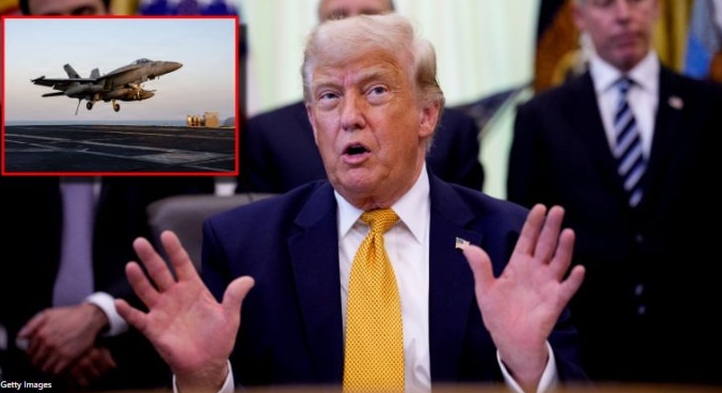
“The unwarranted aggression against commercial shipping by Iranian forces clearly violated the ceasefire,” CENTCOM declared in an official statement. Military planners identified the previous day’s attack on the Singapore-flagged vessel as the triggering incident for the Friday strikes.
The targeted cargo ship sustained damage to its bridge structure but suffered no casualties or environmental contamination, according to initial damage assessments. The United Kingdom Maritime Trade Operations Centre reported the vessel was operating near Oman’s territorial waters when struck by Iranian drones.
Ceasefire Agreement Under Strain
The military exchange threatens a 14-point memorandum of understanding signed between Washington and Tehran just weeks prior, which promised 60 days of negotiated peace while both nations worked toward resolving disputes over Iran’s nuclear capabilities and regional power dynamics. Iran had committed to maintaining secure passage through the vital waterway without imposing transit fees during this preliminary period.
BREAKING: The U.S. military has launched airstrikes on Iranian targets after an attack on a cargo ship in Strait of Hormuz.
CENTCOM says the strikes targeted drone and missile storage sites, along with radar installations. A senior U.S. official tells Fox News the operation was… pic.twitter.com/C2Sa2Ma4NQ
— Fox News (@FoxNews) June 26, 2026
The initial agreement sparked renewed commercial activity through the strait and contributed to global oil prices retreating toward pre-conflict levels. However, disagreements over maritime routing have created friction between the parties almost immediately.
The United States favors directing commercial traffic through southern corridor routes near Oman’s coastline, while Iran maintains that vessels should follow paths closer to Iranian territorial waters. Tehran’s Persian Gulf Strait Authority warned Thursday that ships deviating from Iranian-designated routes would forfeit safety guarantees and insurance coverage protections.
Diplomatic Implications Uncertain
Vice President JD Vance, who has spearheaded negotiations with Iranian counterparts, defended the military action as a necessary response to treaty violations. “Iran signed a ceasefire agreement. We have honored it,” Vance stated across social media platforms, emphasizing that diplomatic channels remained available for resolving disagreements.
Vice President Vance issues a stark warning to Iran, saying further attacks will be met with force following U.S. strikes on Iranian targets along the Strait of Hormuz. pic.twitter.com/qqaxbkiK59
— Fox News (@FoxNews) June 27, 2026
“If they have disagreements about how the memorandum of understanding is being applied, they can pick up the phone. But violence will be met with violence,” Vance communicated to reporters. The vice president’s measured tone suggested the administration wanted to avoid complete diplomatic breakdown despite the military escalation.
The Friday strikes represent the first direct American military operation targeting Iranian assets since both nations committed to their provisional ceasefire arrangement and launched comprehensive negotiations toward a permanent settlement. Officials acknowledged uncertainty about whether the exchange would derail ongoing peace talks scheduled over the coming weeks.
This story has been updated. CNN’s Staff contributed to this report.